What a proof-of-concept device can and can’t tell you
Cervicam Thesis Series
Part 6 of 6
- 1 The most important number in childbirth is basically a guess
- 2 Ultrasound fixes the accuracy problem. It also costs too much.
- 3 Building a cervix-measuring camera probe on a Raspberry Pi budget
- 4 Everything that broke while building Cervicam
- 5 I tested Cervicam with real healthcare workers. Here’s the usability score.
- 6 What a proof-of-concept device can and can’t tell you
This is the last post in this series, so it’s a good place to be honest about what actually got proven here and what didn’t.
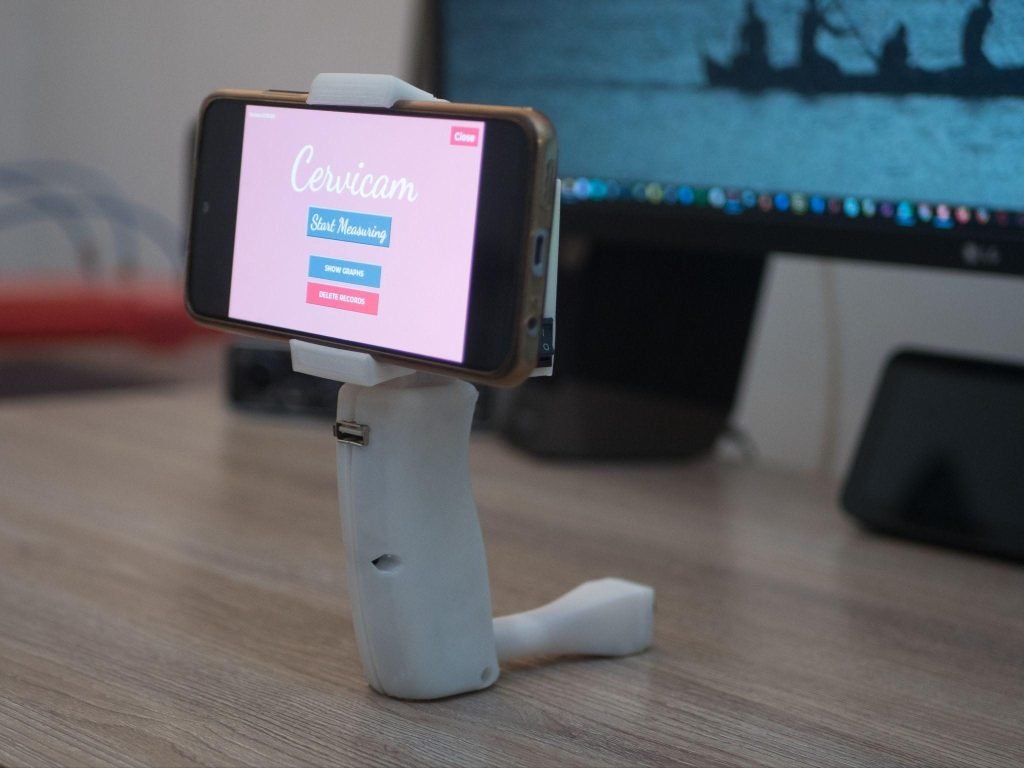
Over the last few posts I’ve walked through why measuring cervical dilatation by feel is unreliable, why ultrasound doesn’t fix that at scale, how I built a camera-based device called Cervicam to try a different approach, everything that broke along the way, and what the healthcare workers who tested it actually said about using it. One thing I want to be upfront about: this is a proof-of-concept, tested only on a 3D-printed cervix model, never a real patient. Even several iterations further, the idea of this being used on someone in labor is a scary proposition.
So what did six posts and a thesis actually get me?
What’s confirmed
The short version: the idea works, and people could use it. Cervicam’s camera-based approach is technically feasible, and the usability testing backed that up, with an adjusted System Usability Scale score of 68.96 once a statistical outlier was removed (I go through those numbers in detail here). That’s a real result. It’s also the ceiling of what this particular study can claim.
My own thesis’s conclusion is blunt about where the gap actually is:
“The device’s acceptance hinges primarily on hardware design improvements.”
Not the concept. The hardware. Which is a more useful finding than it sounds, because it means the next steps are specific, not vague.
What’s next, if someone wants to pick this up
My thesis ends with a set of recommendations, written for whoever builds the next version of something like this. They’re worth stating plainly rather than burying in an appendix:
- Test it against the standard, head-to-head. A proper comparative study against conventional manual examination, with task-performance metrics alongside the usability score, would say a lot more than usability testing alone.
- Build a better dummy. My simulation rig, like the one used by a similar device called DilaCheck1 before it, is a simplified stand-in. A rig that more realistically replicates the anatomy, vaginal walls included, would make for a more convincing test.
- Round off the probe. This came up again and again in testing: the insertion probe needs to be rounder and softer. It’s the single most concrete hardware fix on the list.
- Design for the person who isn’t used to new tech. Ease of use matters more for some users than others, and a device that only works well for the technologically comfortable isn’t actually solving the staffing problem it’s aimed at.
- Ask the people who’ve actually been in labor. This is the one gap in Cervicam’s own study that still bothers me. I tested the device with the healthcare workers who’d use it, not with anyone who’s gone through the exam it’s meant to replace. It isn’t a new question for me, either: years before this thesis, I ran a separate survey asking mothers directly about their own experience with internal exams during labor, comfort, consent, whether it even felt respectful. That survey never fed into Cervicam at all, but it’s part of why this gap bothers me more than a typical “future work” line might suggest. A device healthcare workers like is worth little if the people on the other end of it don’t want it near them.
- Point the camera at other things. The same imaging approach could plausibly help with other obstetric conditions, cord prolapse among them. Cervical dilatation just happened to be where I started.
Who else this is for
My thesis names four groups this work is meant to matter to, beyond “future researchers who want to build on this specific device.”
For clinicians and health institutions, the pitch was always about reliability and speed: a measurement method that’s less dependent on who happens to be doing the exam, which matters in places where there simply aren’t enough trained staff to go around. There’s also a smaller, more speculative idea tucked into that: a camera-based device opens a door toward telemedicine in obstetrics that a hands-on exam never could.
For academic and research sectors, the ask is narrower and more useful: evidence that it’s worth re-examining how labor progress gets assessed at all, rather than treating the current method as settled science because it’s the one everyone learned first.
For government sectors, it’s smaller still, and I think that’s honest. This is a single proof-of-concept built by one graduate student, not a policy paper. The most it can reasonably claim is to be one data point worth bringing into a conversation about how labor and delivery care gets managed, not a finished recommendation for anyone to adopt.
The question I didn’t answer
Here’s the part I keep coming back to, and it’s bigger than anything Cervicam itself can settle.
Every device I’ve talked about in this series, ultrasound, DilaCheck, and now Cervicam, has been judged against the same yardstick: the manual exam, measured in centimeters, treated as if the cervix were a circle you could describe with a single diameter. My thesis’s own closing argument is that this assumption deserves scrutiny it’s never really gotten. A cervix isn’t guaranteed to open as a neat circle, and if it doesn’t, the more honest measurement might be something like the circumference of an ellipse, not a diameter at all.
That’s not a small footnote. It means the “gold standard” every one of these devices, including mine, gets measured against was never rigorously validated as the right thing to measure in the first place. We’ve spent decades arguing about how accurately to measure something without settling whether we’re measuring the right shape.
I don’t have an answer to that. I’m not sure anyone fully does yet. But it’s the question I’d want the next person working on this to sit with longer than I got to, and it felt dishonest to end this series without at least saying it out loud.
This post is adapted from my unpublished Master’s thesis, “Touch Me Not”: A Cervix Uteri’s Plea for a More Objective Cervical Dilatation Measurement — Proof of Concept for a Camera-Based Cervimeter, completed July 2024 for my MSIT at MSU-IIT. Publishing it wasn’t a requirement for the degree, so parts of it are appearing publicly here for the first time. It hasn’t been peer-reviewed, and the views and conclusions are my own. Shared under CC BY-NC, with attribution appreciated.
References
Most of these come straight from my thesis’s own reference list.
1 Martin, E. L., Firman, B., & Berghella, V. (2021). Novel device vs manual examinations for the measurement of cervical dilation in labor: A randomized controlled trial. American Journal of Obstetrics & Gynecology MFM, 3(3), 100328. https://doi.org/10.1016/j.ajogmf.2021.100328
Enjoyed this one?
Let J know with some claps